Our projects
TXT - Language as a track
Forensic linguistics is an emerging discipline that is used when documents of any kind become the subject of an investigation. It can identify linguistic characteristics of unknown authors, compare them with reference texts of potential suspects and create language profiles for further investigations. As these analyses have to be carried out manually by experts, their use is currently very limited. It is therefore particularly important to know in which situations experts should be consulted - and this is precisely where this project comes in.
The "TXT - Language as a Trace" project aims to create an AI-supported analysis tool that examines texts to determine whether in-depth analyses by experts are possible and useful. In addition, a preliminary assessment is to be made as to whether a similar linguistic trace already exists in the database, which could then be subjected to further analysis by experts. As a data basis for this project, the handwritten CV collection of the Document & Handwriting Investigation Unit in the Office of Forensic Science of the Federal Criminal Police Office (BK) in the Federal Ministry of the Interior (BMI) is to be digitised and supplemented by further incriminated letters. Methodologically, this goal is to be achieved through the use of machine learning techniques, whereby an AI-based tool can make a time-efficient statement in these two areas as to whether an analysis is possible and whether internal comparative texts should be examined more closely. [https://projekte.ffg.at/projekt/5137328]
Duration: 01/2026 - 12/2028
Project partners: Institute for English Studies (University of Graz), Centre for Data Science in Business and Society - BANDAS (University of Graz), Computer Vision Lab (Vienna University of Technology), WARETEC IT Solutions GmbH
Recipient: Federal Ministry of the Interior


Living space - prison space: between individuality and punishment
The aim of the project is to use a criminological, architectural, psychological and legal approach to bring the prison space into focus as a living space and to make it accessible as an object for further consideration, for example with regard to the prison climate, preparation for release and the economics of the penal and detention system.
The project will work with photo series, room plans and interviews with prisoners and prison staff. The multidisciplinary approach is intended to provide a differentiated picture of lived, spatial individuality, its points of reference and its potential.
Duration: 03/2025 - 04/2028

COVIOCRIM
Building strength and commitment to counter violent crime
COVIOCRIM - Building strength and commitment to counter violent crime is a preparatory funding project (Austian Development Cooperation) that will establish a long-term collaboration primarily between the ZiK and the Institute of Comparative and European Criminal Law at New Vision University, supported by the Clinical-Forensic Examination Center, Diagnostic and Research Institute of Forensic Medicine (MedUni Graz). It shall act as a platform for exchanging experiences and developing non-degree certificate programs for professionals in the sphere of counteracting violence, in particular against women and girls.
Duration 01/2023 - 05/2023
Building on the preparatory funding project, the follow-up project is now developing multiple interventions that will also reach other regions of Georgia.
Duration 03/2024 - 02/2027
Intuition in criminal proceedings?
On the interdisciplinarity of motives in special preventive decision-making practice - analysis and synthesis
Intuition in criminal proceedings? -On the interdisciplinarity of motives in special preventive decision-making practice - analysis and synthesis is a project of the Province of Styria (UFO - Unconventional Research) led by Nina Kaiser and carried out together with Ida Leibetseder. The project aims to conduct a quantitative and qualitative survey of special preventive decision-making practices in criminal proceedings and their interdisciplinary nature.
Should I pack an umbrella? Take out insurance? Our lives are full of prognostic decisions that require us to weigh up numerous factors. The criminal justice system must also face such challenges, for example when examining the likelihood of an offender reoffending and making suitable interventions to prevent future crimes. The law provides the courts with a way to do this. But what factors are actually taken into account in these decisions? Can legal knowledge and experience provide sufficient material for such important decisions?
Duration 10/2022 - 09/2023

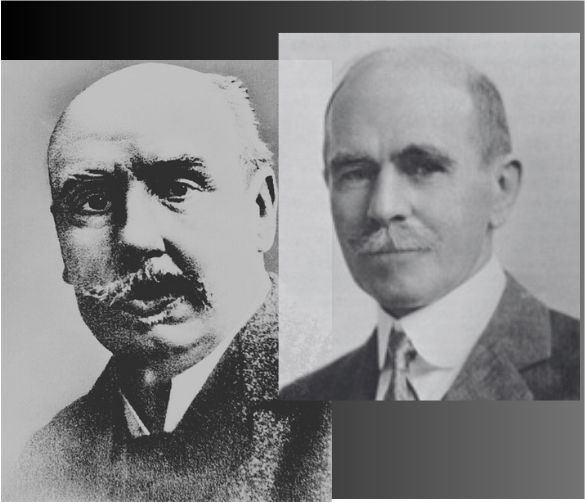
Reuniting two masters of evidence: John Henry Wigmore and Hans Gross
On the traces of Austrian-American relations in criminal sciences at the dawn of the 20th century
Reuniting two masters of evidence: John Henry Wigmore and Hans Gross, is a project funded by the Botstiber Institute for Austrian-American Studies and led by Nina Kaiser. The project sheds light on the connection between the Graz professor and "father of criminal science" Hans Gross and the US-American professor John Henry Wigmore. Archive research will shed light on the relationship between the two pioneers and the Austrian-US connections in criminal science in the early 20th century. The project will provide insights into a (probably underestimated) influence of Austrian criminal science on US developments (and vice versa) and ultimately contribute to the understanding of historical developments in this field both in the United States and in Austria.
Duration: 09/2022 - 08/2023
Would you like to learn more about the project and its results?
In the Botstiber Podcast Nina Kaiser reveals details about the project.